Enterprise Vendor Evaluation & Content Syndication Strategy
Determining whether a new enterprise content syndication platform could improve retailer publishing, operational efficiency, and long-term business value through comprehensive technical, usability, and workflow evaluation.
General Mills was evaluating whether to replace its existing content syndication platform with a new enterprise solution. Rather than relying on vendor demonstrations or feature comparisons alone, the organization needed an objective assessment of how each platform would perform within its existing ecosystem, integrate with current technologies, support business workflows, and improve the day-to-day experience for operational teams.
As the lead analyst for the pilot, I developed the evaluation framework, defined success criteria, conducted technical and usability assessments, coordinated retailer testing, documented findings, and translated hundreds of observations into a strategic recommendation that informed future platform decisions.
Overview
Role
Senior Product Information Capabilities Analyst
Timeline
August 2022- February 2023
Team
Business Stakeholders • Product Owners • Enterprise Architects • Engineering • Vendor Partners • Retail Operations • Content Specialists
Responsibilities
Evaluation framework development
Technical analysis
Workflow evaluation
Usability testing
Vendor assessment
Retailer validation
Requirements analysis
Executive recommendations
The Challenge
Selecting an enterprise platform impacts far more than software licensing. A new content syndication solution would need to integrate with existing Product Information Management (PIM) systems, support complex retailer requirements, reduce manual work, and improve operational efficiency without disrupting existing business processes.
While vendors demonstrated similar capabilities on paper, the organization needed evidence showing how each platform performed under real business scenarios. The evaluation required balancing technical feasibility, user experience, retailer connectivity, automation capabilities, and long-term business value before making a strategic investment.
Building the Evaluation Framework
Before testing could begin, I designed a structured evaluation methodology that ensured each platform would be measured consistently across technical capabilities, operational workflows, retailer performance, and user experience.
Rather than relying on subjective opinions, the framework established standardized scoring criteria, evaluation questions, success metrics, and testing scenarios that could be repeated across multiple retailers and business functions. This approach allowed stakeholders to compare platforms objectively while maintaining transparency throughout the decision-making process.
Retailer Availability

Analyzed retailer connectivity across multiple content providers to identify integration opportunities, coverage gaps, and overall platform capabilities.
Attribute Availability

Assessed attribute coverage and publication capabilities across content providers to identify gaps, prioritize enhancements, and inform platform decisions.
Retailer Evaluation
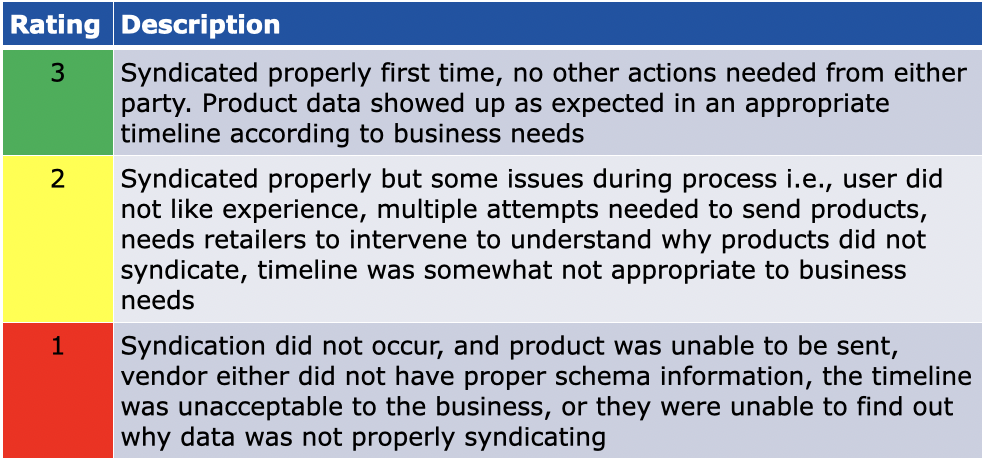
Defined success criteria for content syndication to consistently evaluate platform reliability, identify process improvements, and support vendor recommendations.
Efficiency

Analyzed end-to-end task efficiency across content platforms to quantify workflow complexity, identify manual effort, and highlight opportunities for automation.
UX Time Savings

Compared task completion times across content platforms to quantify workflow efficiency, identify time-saving opportunities, and evaluate overall user experience.
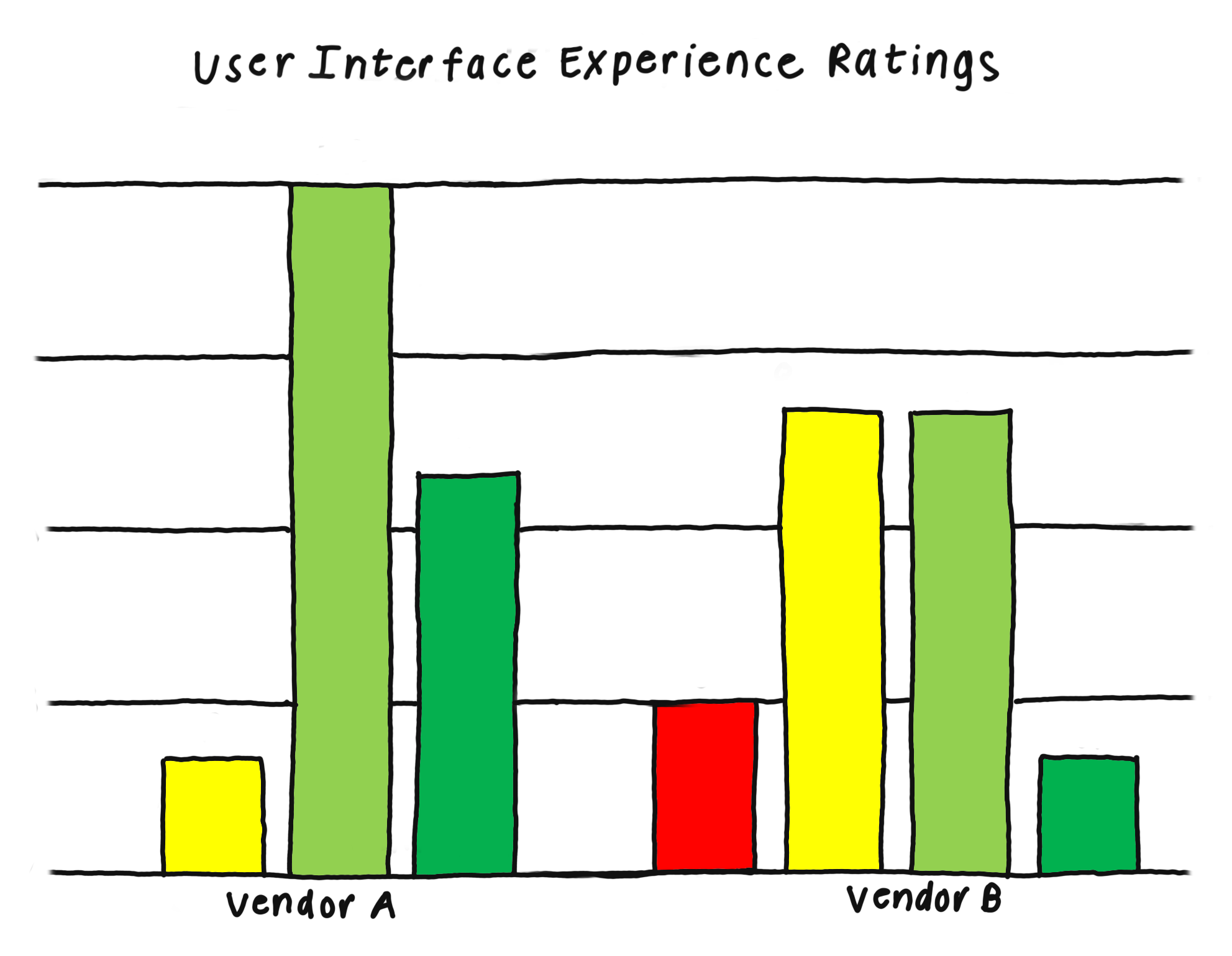
UI Experience
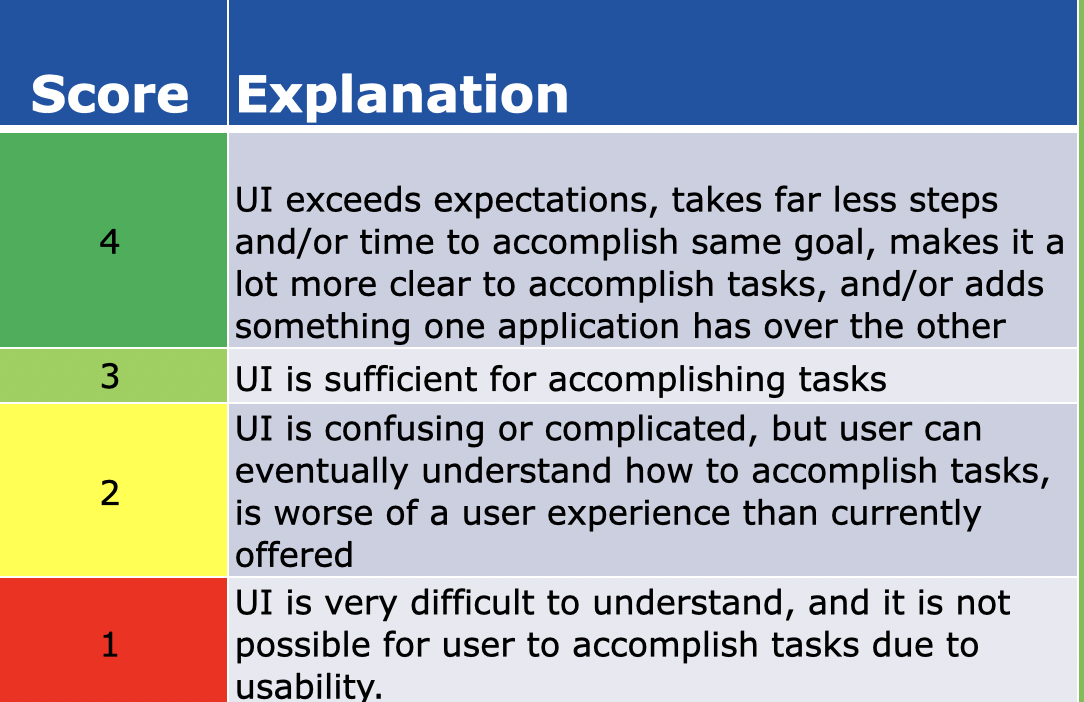
Evaluated the user experience through usability assessments, feature comparisons, and interface analysis to identify strengths, pain points, and opportunities for improvement.

Time to Publish
Compared publication timelines across key workflows to evaluate processing speed, identify bottlenecks, and improve content delivery efficiency.

Workflow Capabilities Comparison Case Study
Evaluated workflow automation for a collaborative product review process by comparing the current experience with a proposed workflow-driven approach. The analysis highlighted user interactions, notification flows, and scalability to identify opportunities for streamlining multi-user reviews.

Enhanced Content Evaluation
Developed a structured evaluation framework to assess enhanced content capabilities across vendors, measuring functionality, retailer support, user experience, and overall readiness against defined business requirements

Insights Analytics Tool Evaluation
Evaluated reporting and analytics capabilities to assess data visibility, support quality improvements, and measure the effectiveness of user insights..
Technical & Integration Assessment
One of the largest areas of evaluation focused on how each platform would integrate within General Mills' existing technology ecosystem.
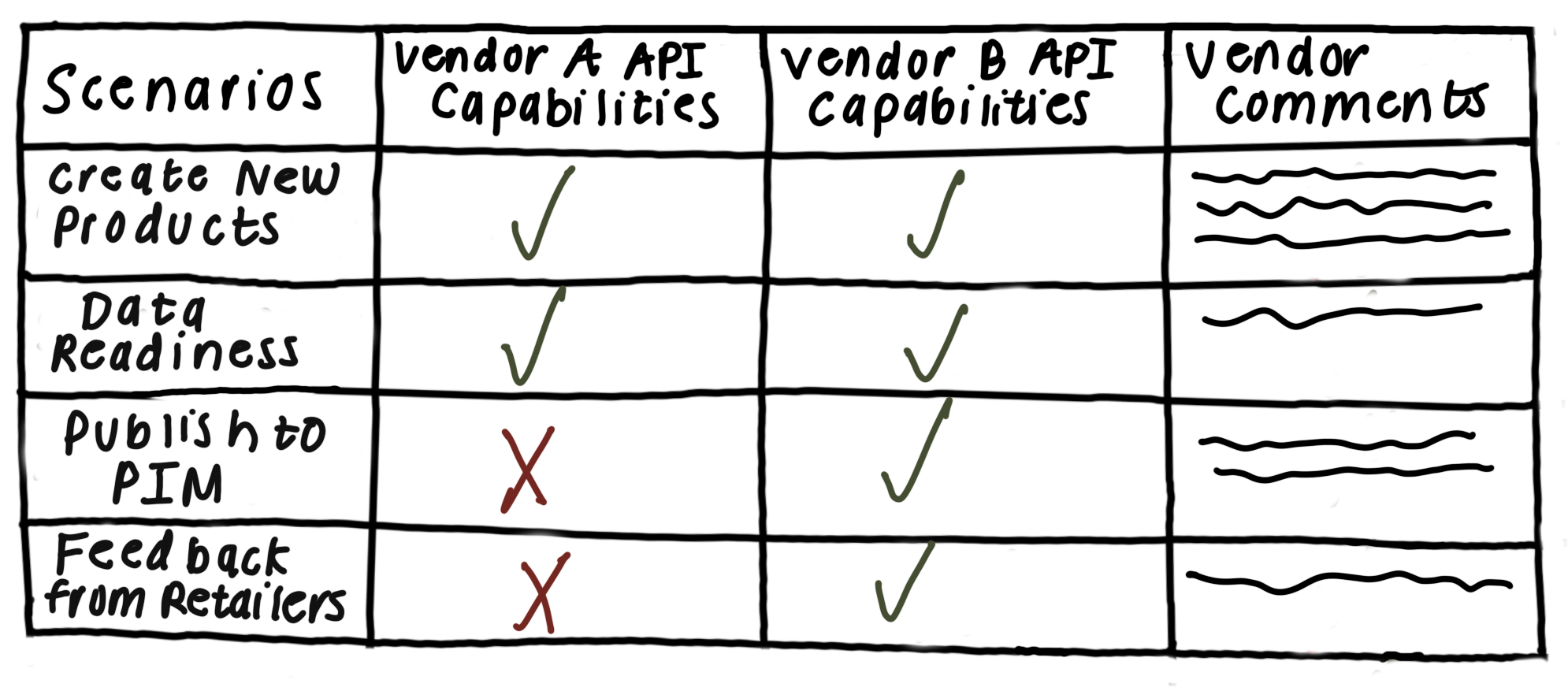
Working alongside technical partners, I evaluated API capabilities, retailer connectivity, attribute availability, automation potential, and compatibility with our Product Information Management solution. Beyond simply identifying whether integrations existed, the analysis considered how each platform would affect downstream workflows, automation strategies, and long-term system architecture.
These findings helped identify areas where additional manual effort would be introduced and where existing automations could be preserved or expanded.
Retailer Validation Through Real-World Testing
Rather than accepting vendor claims at face value, the pilot validated platform performance through live publication testing across major retail partners, including Amazon, Walmart, and Target.
Products were published, updated, and monitored throughout multiple testing scenarios to evaluate publication success, retailer feedback, remediation effort, content accuracy, and publishing timelines. Each result was documented using standardized scoring criteria to ensure consistent comparisons between platforms.
Testing revealed not only whether content could be successfully syndicated, but also how efficiently issues could be identified, resolved, and communicated throughout the publishing process.
Measuring the User Experience
Technology decisions extend beyond functionality. The daily experience of the people using the platform can significantly influence adoption, productivity, and long-term success.
To better understand operational impact, I evaluated both applications through usability-focused exercises that measured task completion time, interaction steps, workflow complexity, interface organization, and overall ease of use.
By combining quantitative metrics with qualitative observations, the evaluation highlighted where additional manual effort was introduced and where workflows could be simplified for content teams.
Project Outcomes
The pilot established a repeatable framework for evaluating enterprise software while providing leadership with a comprehensive understanding of how each platform would perform within General Mills' content ecosystem.
Key contributions included:
Developed a standardized evaluation framework used across technical, operational, and business assessments.
Validated platform capabilities through live retailer testing rather than vendor demonstrations alone.
Evaluated technical integrations, automation opportunities, and workflow impacts across multiple enterprise systems.
Measured usability through task analysis, workflow comparisons, and operational efficiency studies.
Synthesized research into executive recommendations supporting strategic platform decision-making.
From Findings to Recommendation
As testing concluded, findings from technical evaluations, retailer validation, usability studies, and operational assessments were synthesized into a comprehensive recommendation for stakeholders.
Rather than emphasizing feature comparisons alone, the final recommendation considered automation opportunities, business processes, integration strategy, operational efficiency, and long-term maintainability. The resulting analysis provided leadership with a clear understanding of the tradeoffs associated with each platform and the broader organizational impact of adopting a new solution.
Reflection
This project reinforced that successful product decisions require more than feature comparisons.
By combining technical analysis, user experience evaluation, operational workflows, and real-world validation, I learned how structured research can reduce uncertainty and help organizations make confident technology investments.
It also strengthened my ability to bridge conversations between technical teams, business stakeholders, and end users, translating complex findings into actionable recommendations that balanced usability, feasibility, and long-term business strategy.