Building the Foundation for Enterprise Content Automation
Designing the future of AI-assisted content creation through user research, process mapping, and workflow strategy.
I led the discovery phase of an enterprise Content Automation initiative, partnering with product owners, enterprise architects, business stakeholders, and end users to understand how creative content was produced across General Mills. Through stakeholder interviews, workflow mapping, persona development, and future-state experience design, I translated complex business needs into product requirements that guided vendor evaluation and established the strategic foundation for future content automation initiatives.
Before technology decisions could be made, the organization first needed to understand how content flowed across teams, where manual effort created friction, and how AI could create meaningful value without compromising governance, quality, or brand standards.
Overview
Role
Senior Product Information Capabilities Analyst
Timeline
August 2024- March 2025
Team
Product Owner • Enterprise Architects • Brand Experience • Agency Partners • Engineering • Business Stakeholders
Responsibilities
User & stakeholder interviews
Process mapping
Future-state workflow design
Persona development
Requirements gathering
AI use case development
Vendor evaluation
Product strategy
The Challenge
Creative production at an enterprise scale involves far more than designing a single asset. Brand teams, agency partners, legal reviewers, media planners, and internal creative teams all play a role in bringing content to market. Each campaign required assets to be resized, versioned, reviewed, approved, and distributed across multiple retailers and channels, often through disconnected tools and highly manual workflows.
Our team was tasked with exploring how automation and generative AI could simplify this process without disrupting the quality, governance, or brand standards required by General Mills. Before technology decisions could be made, we first needed to understand how people actually worked today and define what an ideal future experience should look like.
Discovery
The project began with extensive discovery across multiple business functions. Through workshops and collaborative working sessions, I documented current-state workflows for Brand Experience planners, agency partners, in-house designers, and supporting teams to better understand how creative assets moved through the organization.

BX Planners

In-House Design
Agency
Partners

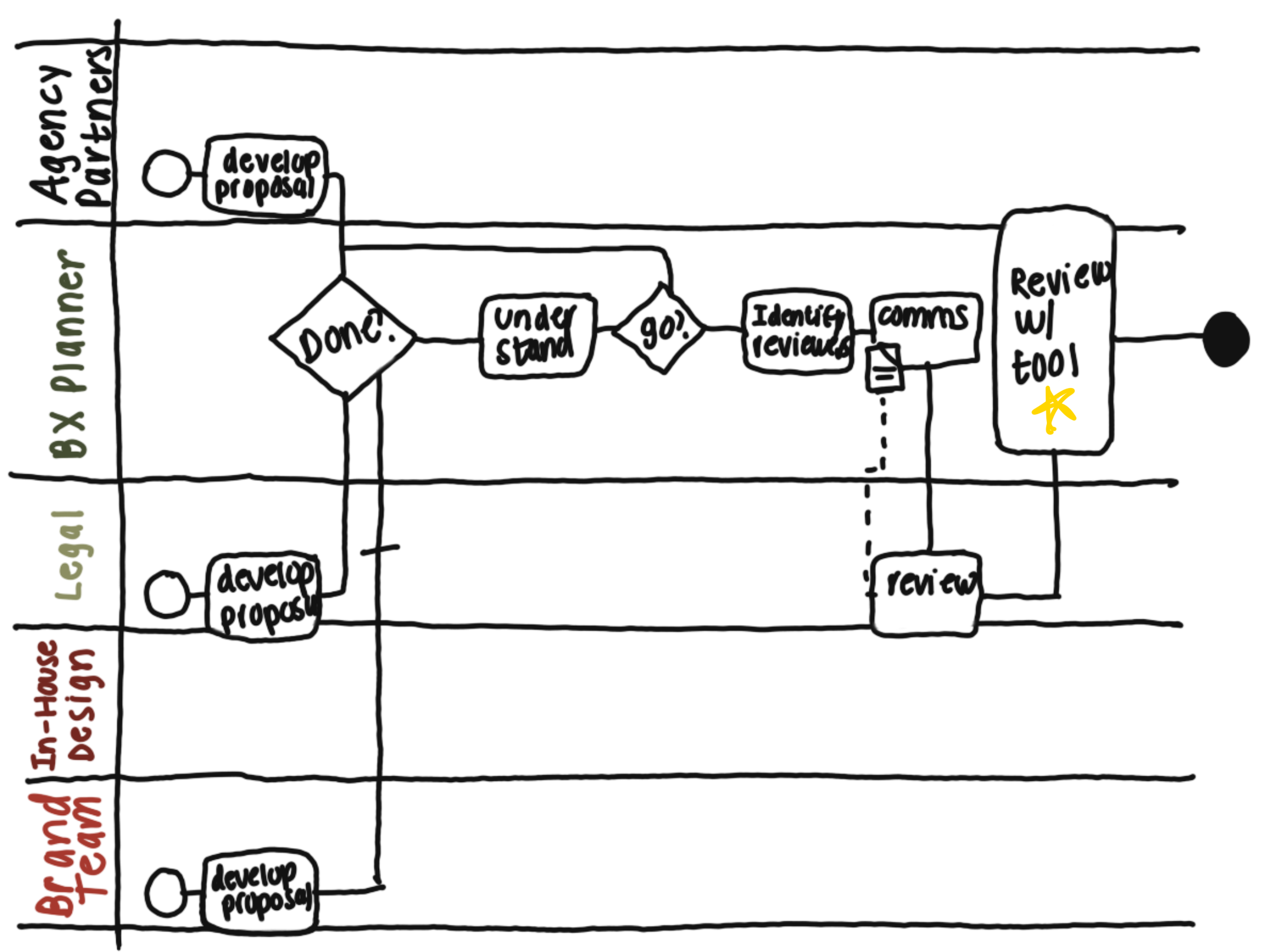
Rather than focusing on a single user, I mapped the complete ecosystem of people, systems, decisions, and handoffs involved in content creation. These process maps uncovered manual work, duplicate effort, approval bottlenecks, and opportunities where automation could reduce production time while maintaining quality and governance.
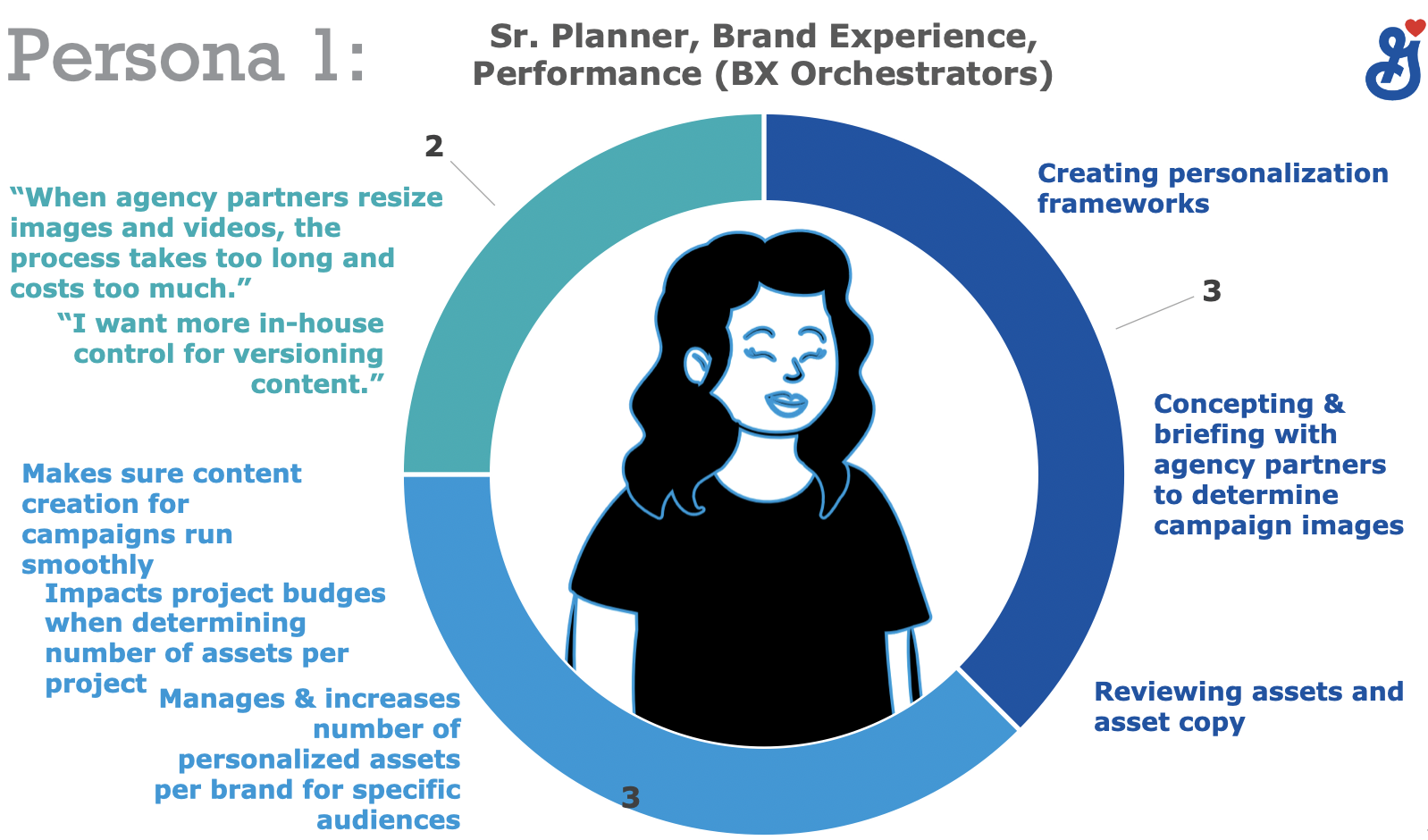
Persona Artifact
This persona represents one of several stakeholder archetypes developed through user interviews and research conducted during the Content Automation initiative. Common pain points were grouped into recurring themes, with the surrounding numbers indicating how many participants shared each concern. These insights were then synthesized into broader opportunities, such as automating image resizing, enabling self-service content versioning, and exploring AI-assisted content generation. The personas served as a foundation for process mapping, ensuring proposed solutions addressed recurring user needs rather than isolated requests.
Designing the Future State
After documenting existing workflows, I partnered with stakeholders to design future-state experiences that reimagined how content automation could support users throughout the creative process.
Instead of beginning with interface design, we first defined how information should flow between people, systems, and future automation tools. These workflows became the foundation for identifying required functionality, evaluating software vendors, and aligning stakeholders around a shared vision of the future.
The resulting process maps captured ideal user journeys, system interactions, integration opportunities, and decision points that would later inform product requirements and implementation planning.
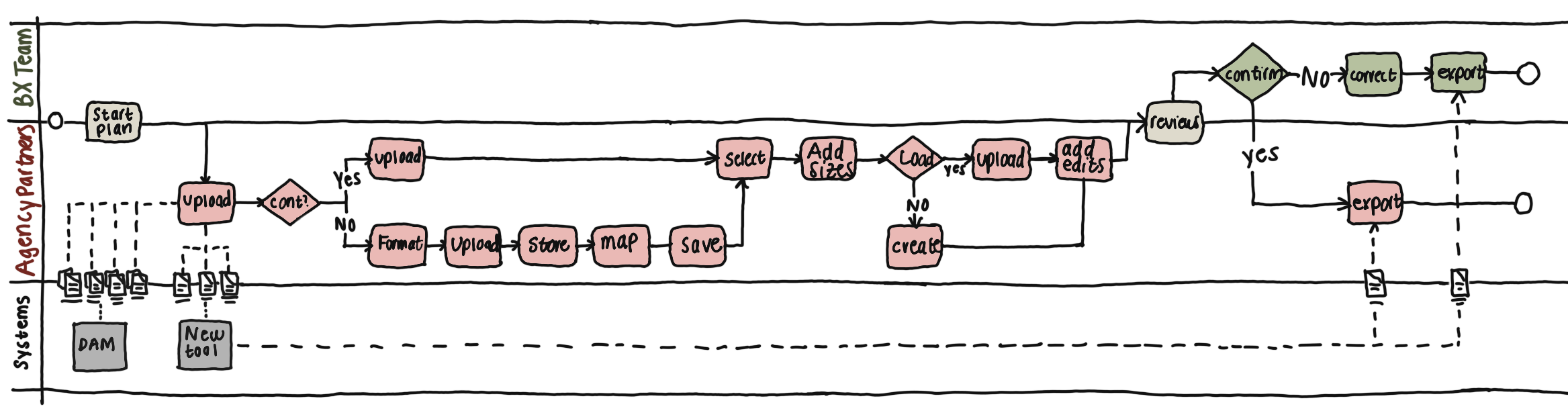
Illustration recreated for portfolio purposes. The original process map has been simplified, modified, and anonymized to demonstrate the scale and structure of the solution while protecting confidential business information.
From Research to Requirements
Insights gathered during discovery were translated into functional requirements for both internal development efforts and external vendor evaluations. Working closely with cross-functional partners, I helped define capabilities related to workflow automation, versioning, retailer compliance, brand voice, AI-assisted copy generation, reporting, integrations, and user experience.
Rather than collecting a list of requested features, the goal was to ensure every requirement could be traced back to a real user need or business problem identified during research.
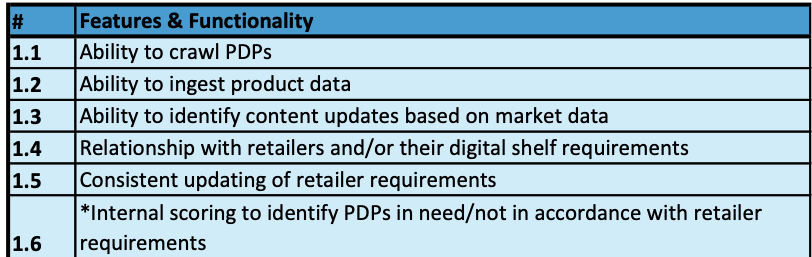
Screenshot excerpted from a larger document. Content has been selectively shown and, where necessary, modified or omitted to protect confidential business information.
Evaluating and Identifying Solutions
To support vendor selection, I developed detailed use cases, evaluation scenarios, scoring criteria, and demonstration materials that allowed competing AI solutions to be assessed consistently against General Mills' business needs.
These scenarios simulated real-world workflows, allowing stakeholders to compare how each platform handled brand voice, retailer requirements, workflow integration, keyword optimization, usability, and content generation quality.
The evaluation framework provided a structured, user-centered approach for selecting technology based on documented business needs rather than feature lists alone. Utilizing this framework, a final vendor was successfully selected.
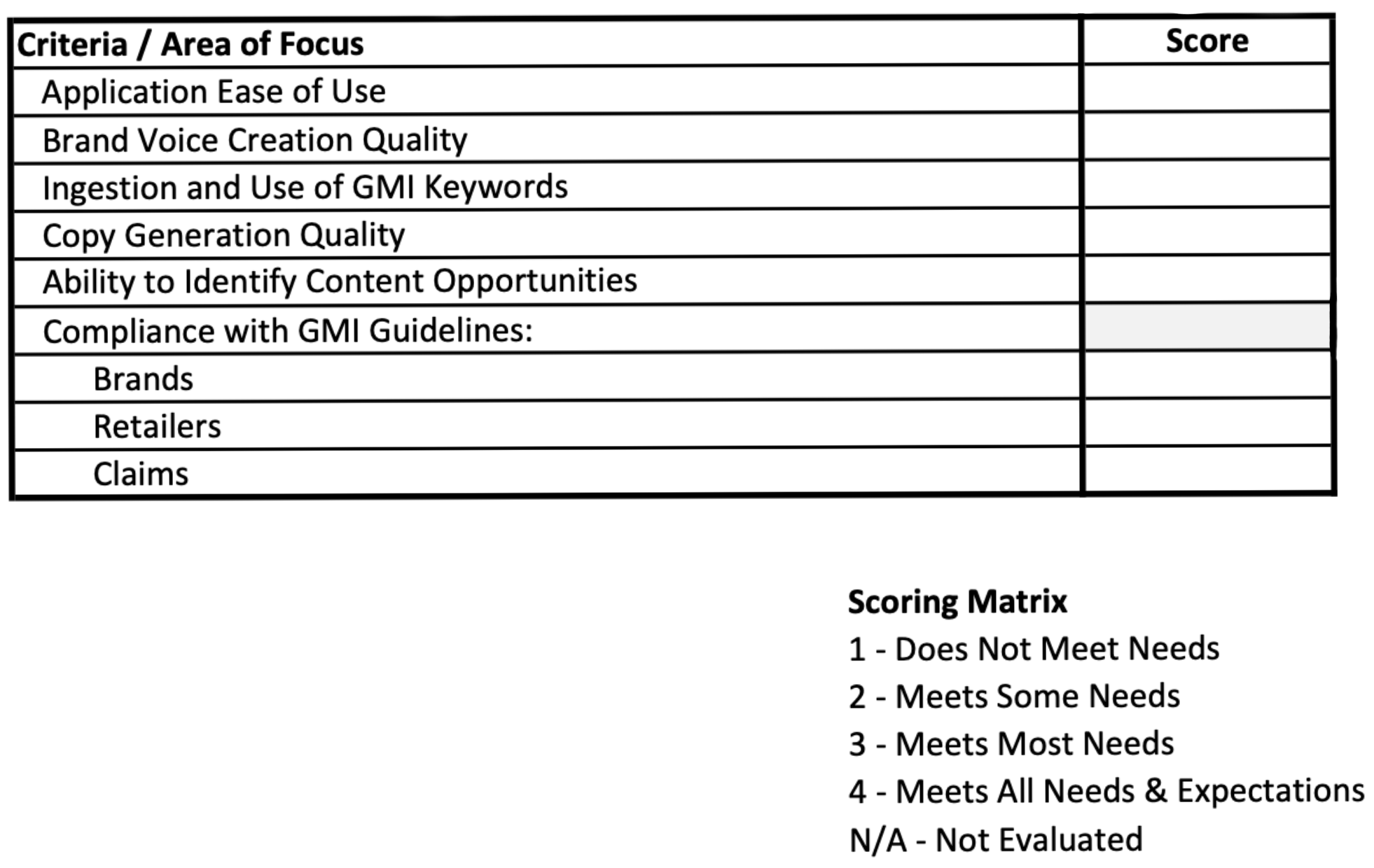
Excerpt from evaluation criteria used during the project. Content has been simplified and modified to protect confidential business information while preserving the overall structure and intent.
Project Outcomes
Although the product continued to evolve as priorities shifted, the discovery work established a shared understanding of enterprise workflows and created the foundation for future content automation initiatives.
Key contributions included:
Mapped current and future workflows across multiple enterprise personas.
Identified opportunities to reduce manual effort through automation.
Developed functional requirements grounded in user research.
Created standardized AI evaluation criteria and business use cases.
Supported vendor selection through structured, user-centered assessments.
Helped establish the strategic direction for future content automation initiatives.
Reflection
This project fundamentally changed the way I think about UX.
I learned that meaningful design often begins long before wireframes or interfaces exist. By investing time in understanding people, processes, and business goals first, our team was able to align stakeholders around a shared vision before evaluating technology or building solutions.
It reinforced that great user experiences aren't created by designing screens alone. They're created by understanding complex systems, asking thoughtful questions, and designing better ways for people and technology to work together.